
The Splinter in Your Brother's Eye (And the Plank in Yours)
From Sermon on the Mount, Matthew 7:3-5
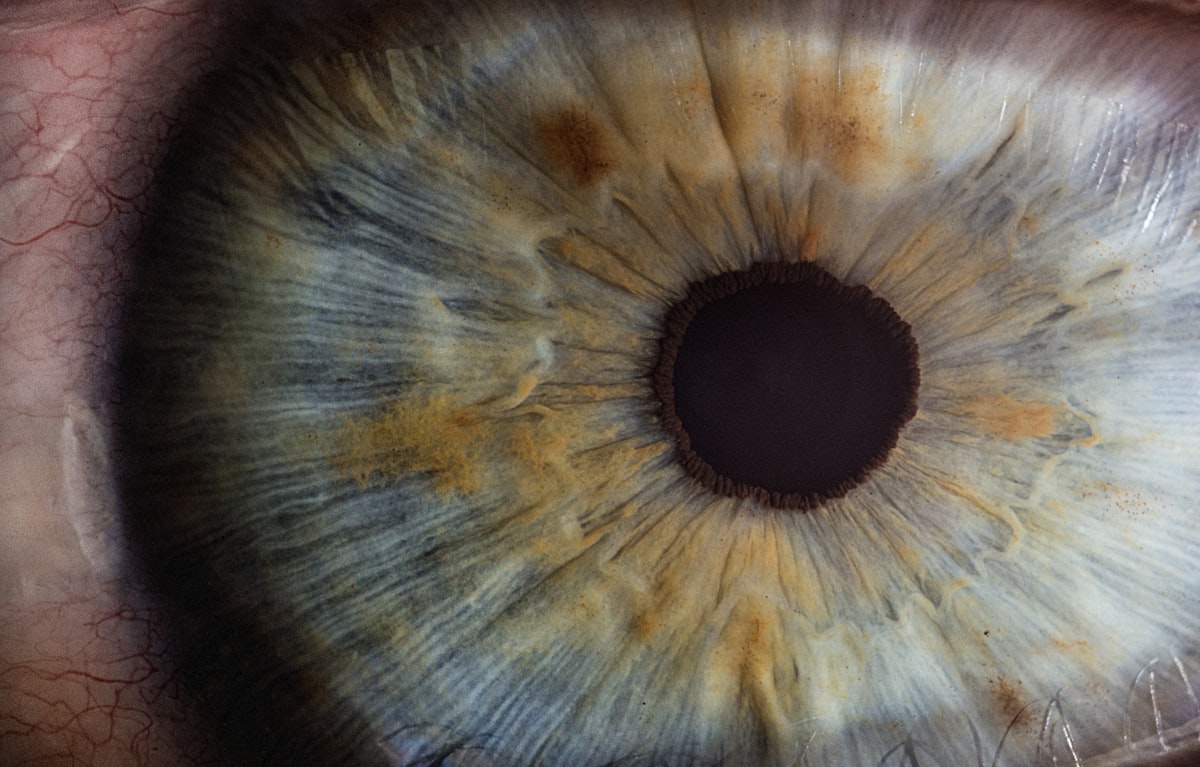
Why do you look at the speck of sawdust in your brother’s eye and pay no attention to the plank in your own? That’s the line, more or less. A man notices a small speck of dust in someone else’s eye — genuinely notices it, can’t stop thinking about it — while there’s a plank in his own that he’s somehow stopped seeing entirely.
It is a sharper joke than it sounds, and it almost never gets read that way. It gets read as a stern warning about hypocrisy, delivered in a stained-glass voice. But sit with the picture for a second. A man carrying a plank in his own eye, examining someone else’s eyelash with real concern. The image is supposed to land as absurd, because the behavior is absurd, and we do it constantly.
Here’s the part that’s easy to miss: the speck and the plank aren’t really comparable in the way “small problem, big problem” suggests. They’re comparable in a different way — whose problem is it to fix. The speck is in someone else’s eye. You can point at it, comment on it, lose sleep over it, and not one particle of sawdust moves, because it was never yours to remove. The plank is in your own eye. It is, of the two, the only thing in the entire scene actually within reach.
This is the Tenant’s favorite move. The Tenant — that inherited inner critic who moved in early and pays no rent — is remarkably talented at quality control, as long as the subject under review is someone else. Give it the news, a colleague’s tone in a meeting, a stranger’s driving, the general state of the world, and it produces commentary with the confidence of a man who has personally inspected every eye in the building. Point it at the mirror and it suddenly has nothing to say, or worse, it changes the subject. The speck is usually real. That’s what makes it such an effective decoy.
The plank doesn’t compete with the speck for your attention because it’s bigger. It competes because it’s yours — the one piece of the whole picture you actually have a lever on.
There’s a reason this lands as a punchline and not a lecture: everyone in the room recognizes themselves immediately. Nobody needs it explained. We’ve all spent an evening with strong opinions about problems located nowhere near us, while the one thing in arm’s reach sat there, untouched, the whole time.
And here’s the quiet part Jesus doesn’t spell out but seems to be gesturing at: the world’s problems are, in some inconvenient sense, just everyone’s planks, left in. Take yours out and the world doesn’t visibly change. But it’s one plank fewer in a room full of people squinting at each other’s eyelashes — which is either nothing, or it’s the only kind of “fixing the world” that’s ever actually available to you.
If this was useful, the next one will be too.
One short essay when it’s ready. No schedule, no spam, no tracking.